Last year I bought a boat - a Paper Tiger catamaran. This summer it's been great fun, but it's trampoline is getting fairly worn. So I decided to make a new one, and my sewing machine wasn't quite up to the task of getting through heavy fabric. A friend messaged me one evening saying "there's a sewing machine for free just out of town"...
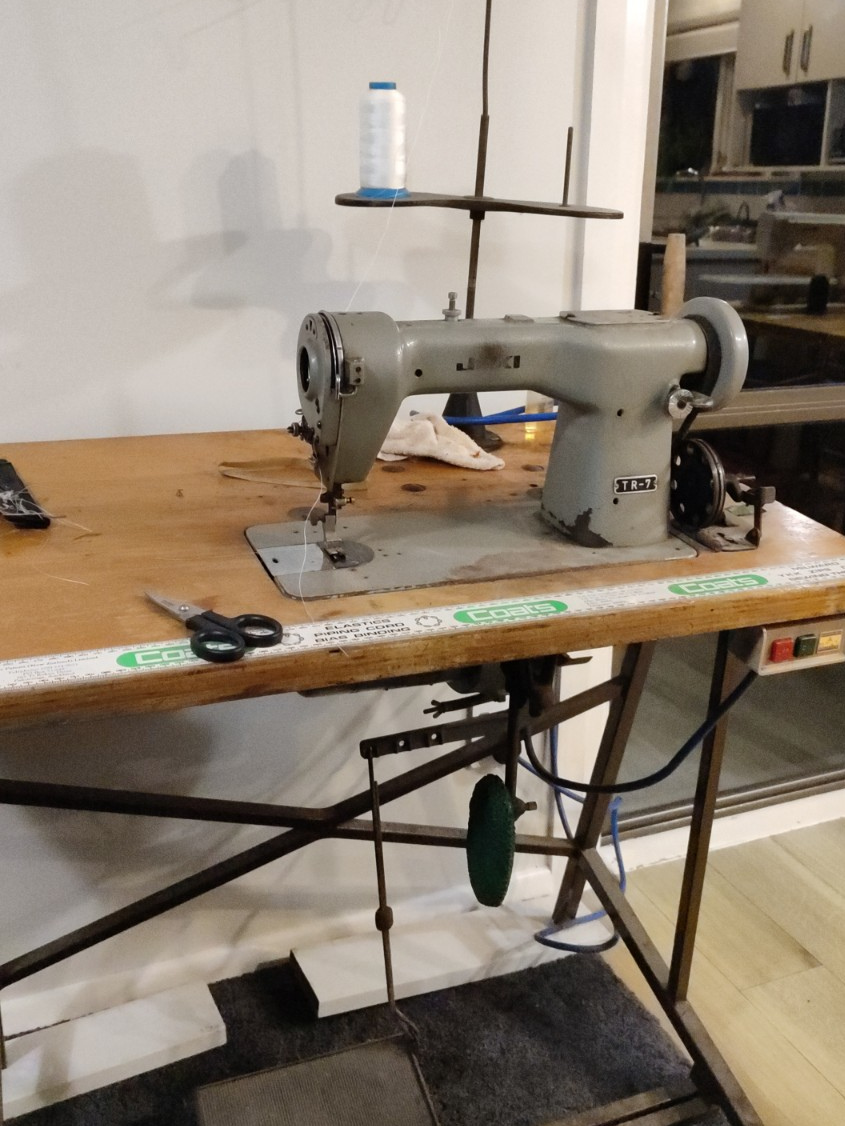
And this is it. A Juki TR-7 that has been sitting in a barn for the past decade. After trailering it home, I gave it some oil, and then turned it on. It's a clutch motor, so the motor spins up and then the foot pedal has a clutch that connects it to the rest of the system. As a result it either goes at zero, or a 2800 stitches per minute. With a long (4mm) stitch length like I want for by boat fabric, this translates to about 20cm of fabric per second - and either all or nothing. I found this uncontrollable.
Fortunately, technology has come a long way since this machine was made, and I can now pick up a brushless servo motor that's a drop in replacement and ... has speed control. Less than a week later (post), then another ten minutes (post), and the new motor is in. Way way more controllable. The old motor was probably 20Kg. The new motor is probably 2Kg. That's 50 years of tech advantage!
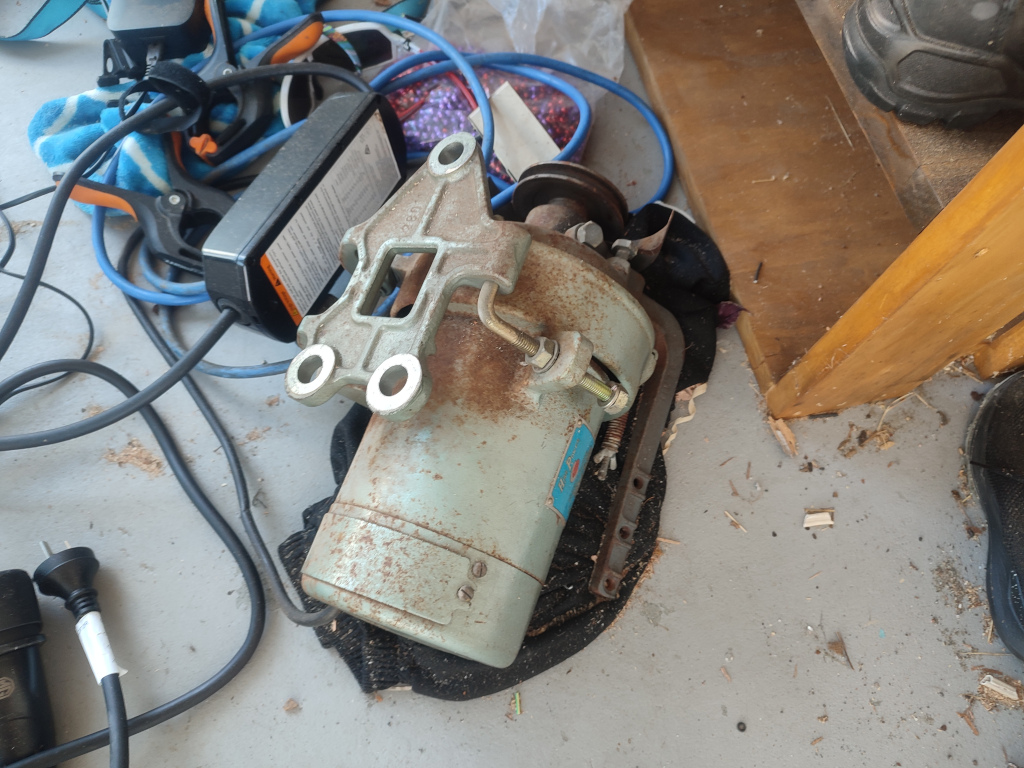
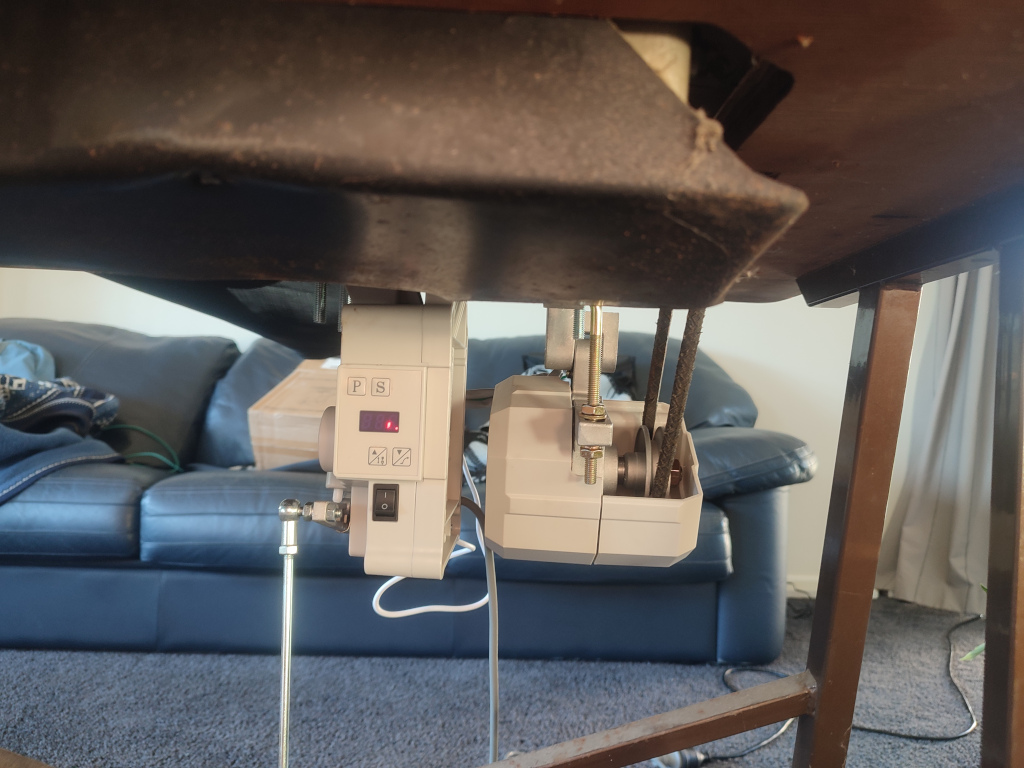
It sews beautifully, the new motor has plenty of grunt - and being a brushless motor with a good controller, it generates lots of power at low RPM. It doesn't rotate until the needle is touching the fabric and then kindof get "stuck" there. A brief push on the pedal will always get at least one full stitch. I think it's doing some sort of position control even though I haven't got the position sensor. It's probably assuming that one rotation of the motor is about one rotation of the needle.
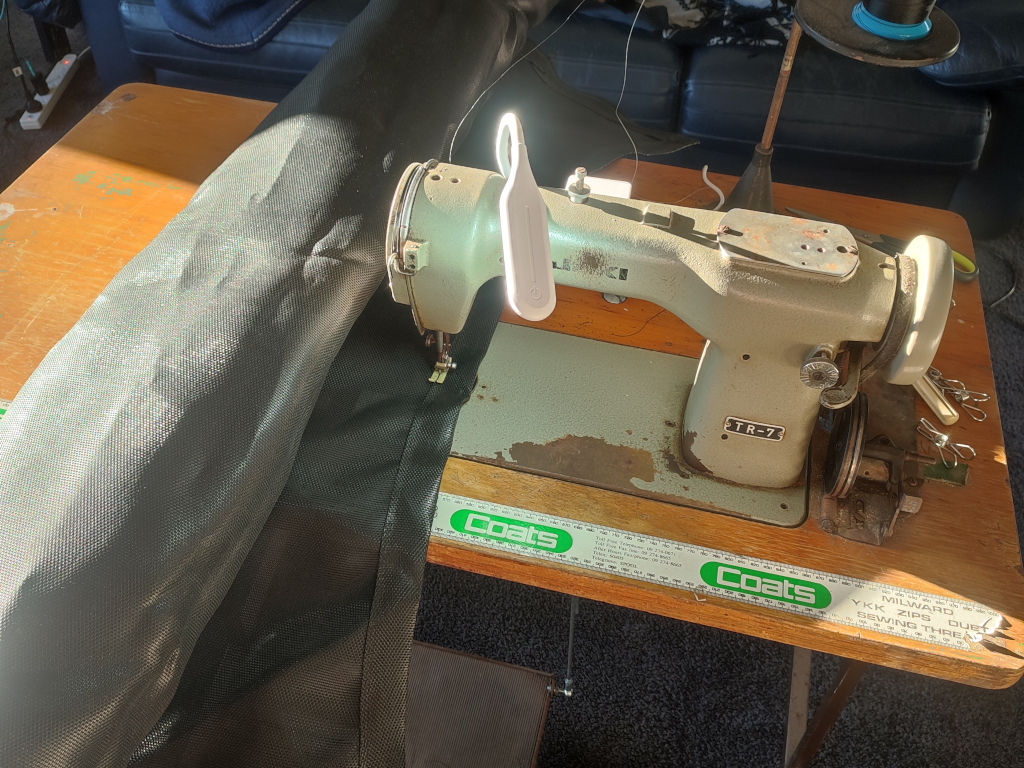
Now the Juki TR-7 is a strange machine. It has a rotary take-up system. But I love how simple it is. There's like two sets of bevel gears, a bobbin, needle and that's pretty much it.